

The conveyor belt: overview and applications
You may have heard of it, but you may not. In any case, an explanation follows in this article, you can read it below. A conveyor belt is the carrier medium of a conveyor belt system, also called a belt conveyor. A belt conveyor is one of many types of systems in transport that exist. A belt conveyor consists of two or more pulleys and an endless loop of a medium conveyor that rotates around them. There are also brake discs that are used, which move the belt and the material on the belt forward. This is just a brief introduction. Want to know more about this specific belt? The following is an overview and the applications in particular are clearly explained.
The conveyor belt: overview and applications explained in more detail
Transporters are big fans of this type of belt, they like to use it. This is due to the fact that it is considered as a labor saving 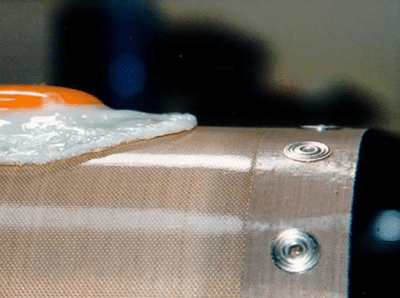 system that allows large volumes to be moved quickly through a process, allowing companies to send or receive higher volumes with smaller storage spaces and less labor costs. About the structure the following. The conveyor consists of one or more layers of material. It is common for belts three layers: an upper cover, a carcass and a lower cover. To give the carcass linear strength and shape. The warp refers to longitudinal cords, whose resistance and elasticity determine the running properties of the belt. The weft represents the whole set of transversal cords allows to make the tire specific resistance to cutting, tearing and effects and at the same time high flexibility. The most common carcass materials are:
- Polyester
- Nylon
- Aramid
- cotton
- Sample
Rubber belt conveyors – for example – are generally used to point irregular base surfaces, small objects that would fall between rollers or bags of product that would sag between rollers. Belt conveyors generally fairly similar in construction consists of a metal frame with rollers on either side of a flat metal bed.
A little history of this belt
Let’s take a short journey into the past to discover the fascinating history of the conveyor belt. Although today the conveyor belt is taken for granted in almost every production line, this important invention has had a long and lively development over the centuries. Initially conveyor belts had an extremely simple design and were often used to transport bags of grain over short distances. The basis was a wooden plate, over which a belt ran of leather, fabric or rubber. The system was very useful for transporting large objects from one place to another. Primitive conveyor belts were used since the 19th century. It was Robins (Thomas) who started a series of inventions and this led to the development of a conveyor belt that was used to transport coal and ores, among other things. Conveyor belts therefore already exist. After that, the production of steel conveyor belts continued. The mining industry was a further application, but it was in 1972 that the longest version of this specific belt was made in France.